The National Police Clearance (NPC) is a common document in the Philippines. Many people use it for job applications, government transactions, and even bank requirements. Before, getting police clearance often meant long lines at the police station. Today, the National Police Clearance System (NPCS) makes it faster because you can start the process online and book an appointment.
What Is a National Police Clearance?
A National Police Clearance (NPC) is an official document issued through the Philippine National Police (PNP). It certifies whether a person has a criminal or derogatory record based on the PNP nationwide database.
National Police Clearance Certificate (Simple Meaning)
Think of it like a background check from the police. It helps offices and employers confirm a person’s identity and safety record.
NPCS (National Police Clearance System) Overview
The NPCS was launched to modernize police clearance issuance across the country. In the past, a police clearance was often local—meaning it only covered the city/municipality where you applied. Now, NPCS connects many stations into a centralized system so checking records is faster and more reliable.
When Do You Need Police Clearance?
Many Filipinos need police clearance for daily life and official paperwork.
Common Uses of Police Clearance
You may need a police clearance for:
- Employment (job hiring requirements)
- Civil Service or government exams
- Business permits (some local processes)
- Bank or credit card verification (some banks ask for it)
- Government transactions (some local civil registry matters)
- Firearm licensing (where applicable)
- Scholarships (some programs ask for it)
- Adoption/guardianship background checks
- As a supporting document in some applications
Important: When Police Clearance Is NOT Accepted
Police clearance is not always accepted for every purpose. For example:
- Some applications may require NBI Clearance instead.
- Certain high-level national transactions may not accept police clearance as a primary document.
Always check the requirement list of the agency you are applying to.
National Police Clearance vs Local Police Clearance
Many people ask: “Which one should I get—National or Local?”
National Police Clearance (NPC)
- Uses the NPCS online system
- Checks records through a broader/nationwide PNP database
- Common for formal work, major verification, and wider acceptance
Local Police Clearance (LPC)
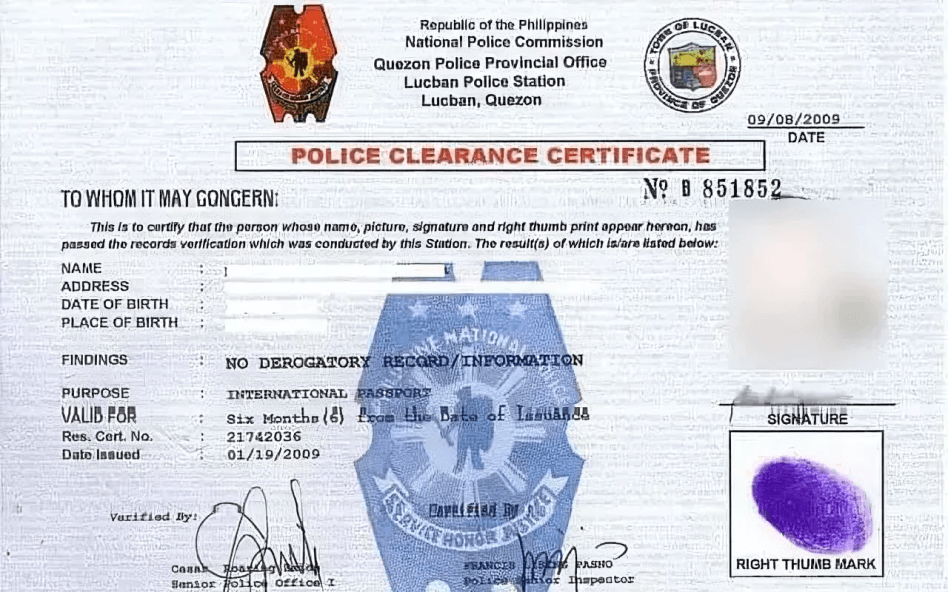
- Usually processed via walk-in at your local police station
- Coverage is often limited to that city/municipality
- Requirements may include Barangay Clearance and Cedula
- Good for local needs (depending on the office asking)
Is Barangay Clearance Needed for National Police Clearance?
For NPC, it is usually not required as a standard requirement.
For Local Police Clearance, barangay clearance is often required.
Police Clearance vs NBI Clearance (Complete Comparison)
Police Clearance and NBI Clearance are both “clearance” documents, but they are not the same.
Quick Difference
- Police Clearance (PNP): police records and checks through PNP database
- NBI Clearance (NBI): broader checks linked to NBI systems and court-related checks
Which One Is Better?
It depends on what the office requires:
- For many jobs, police clearance may be enough.
- For visas, immigration, and many official national purposes, NBI Clearance is often preferred.
If you are unsure, ask the receiving office:
“Do you accept PNP Police Clearance, or do you require NBI Clearance?”
Requirements for National Police Clearance (2026)
Before you apply, prepare your documents. This avoids delays.
Required Documents (Basic)
Bring these on your appointment day:
- Two (2) valid government-issued IDs (original copies, not photocopies)
- Reference number from your NPCS account (save or print it)
- Proof of payment / official receipt
Common Accepted Valid IDs (Examples)
You may use IDs such as:
- PhilID / National ID
- Passport
- Driver’s License
- SSS / UMID
- GSIS UMID
- PhilHealth ID
- TIN ID
- Postal ID
- PRC ID
- Voter’s ID (if accepted in your case)
- Senior Citizen ID
- PWD ID
- Pag-IBIG ID
- School ID (often with proof of current registration, if accepted)
- Other government-issued IDs
Tip: Bring IDs with a clear photo and signature.
If You Have Only One Valid ID
Some applicants may still proceed if they can provide additional supporting documents (for example, a PSA birth certificate). Rules can vary, so it’s best to bring:
- 1 valid ID + PSA birth certificate
- and all payment/appointment details
Special Cases
First-Time Job Seekers (RA 11261):
Some applicants may qualify for fee exemption. Usually, you must present a Barangay Certificate confirming first-time job seeker status. This benefit is typically limited (often one-time use).
PWD Applicants:
If the system provides a PWD option, enter correct details and bring your PWD ID.
National Police Clearance Fees and Payment Options
The police clearance fee has a base amount plus possible convenience fees, depending on payment method.
Fee Breakdown (Typical)
- Base fee: ₱150
- Convenience fee: around ₱10 to ₱30
- Estimated total: ₱160 to ₱180
Payment Methods (Landbank ePayment Portal)
Payment is usually done through the Land Bank of the Philippines (LBP) ePayment Portal, with options like:
- Landbank account/ATM
- GCash
- PayMaya
- BancNet cards (partner banks)
- 7-Eleven via CLiQQ
- Bayad Center
- Credit/Debit card
Important Payment Tip:
Complete payment at least 2 banking days before your appointment when possible. If payment does not reflect, your schedule may be affected.
How to Apply for National Police Clearance Online (Step-by-Step)
This is the main part most people search for: online registration + online appointment.
Step 1: Register at the Official NPCS Website (pnpclearance.ph)
- Go to pnpclearance.ph
- Click Register
- Fill in your details:
- Full name (exactly like your ID)
- Birthdate
- Email address
- Mobile number
- Password
- Verify your account through the email link
Tip: Check your spam/junk folder if you do not see the email.
Step 2: Complete Your Profile
After login, complete all profile fields:
- Nationality
- Birthplace
- Civil status
- Full current address
- Height/weight and other personal details
- Family background (like parents’ names, if required)
- Upload a recent 2×2 photo (white background if required)
Critical Tip (Very Important):
Double-check spelling of your name, birthdate, and address. Mistakes can cause delays or problems later.
Step 3: Schedule an Online Appointment
From your dashboard:
- Click Application for Clearance
- Choose:
- Purpose (often “General” for many needs)
- Police station (choose from the list)
- Date and time slot (AM or PM)
Appointment Tip:
Popular stations in Manila, Makati, Quezon City, Taguig, and other Metro Manila areas may fill up quickly. If your preferred station has no slot, try nearby stations.
Step 4: Pay the Police Clearance Fee
Click the payment link in the portal and pay through LBP ePayment.
Save these:
- Payment reference number
- Receipt / confirmation
- Your NPCS reference number
Step 5: Visit the Police Station (Biometrics)
On your appointment date:
- Arrive during your selected time (AM/PM)
- Present your documents to the officer
- Do biometrics:
- Fingerprint capture
- Photo capture
- Digital signature
- Identity verification
How long does it take?
Biometrics often takes around 10–15 minutes, but waiting time depends on station queue.
Dress Code Tip:
Some stations may not allow sleeveless shirts, shorts, or slippers. Wear decent attire.
Step 6: Receive Your Clearance (Release)
After biometrics:
If you have NO HIT
You may receive your clearance on the same day, often within 30 minutes (depends on station).
If you have a HIT
A “HIT” means your name matches or is similar to someone in the database. This does not automatically mean you have a criminal record. Many HIT cases happen because of common names.
HIT cases may require additional verification and can take around 10–15 working days.
Photo and Fingerprint Capture: What to Expect
What Happens During Capture
At the station, the process is usually:
- Document check (IDs + receipt + reference number)
- Fingerprint scanning
- Photo taken
- Digital signature
- Confirmation
What to Bring (Quick Checklist)
- 2 valid IDs (original)
- Appointment/reference number
- Payment receipt/proof
- Any special documents (first-time job seeker barangay certificate, PWD ID, etc.)
Release Time Summary (No HIT vs HIT)
No HIT (Clean Record)
- Often same-day release
- Usually within minutes after printing (station dependent)
With HIT (Verification Needed)
- Verification process
- Often days or weeks depending on station and case similarity
- Follow the instructions of the Verification Officer
How to Apply for Local Police Clearance (Walk-In)
If your station is not in NPCS or you only need local clearance:
Walk-in Steps
- Go to your local police station (often near city hall)
- Ask for the application form
- Pay the local fee (varies by area)
- Submit documents and fingerprints
- Wait for release
Local Police Clearance Requirements (Common)
- 2 valid IDs
- Barangay Clearance
- Cedula (Community Tax Certificate)
- Photos (sometimes)
Limitation of Local Police Clearance
Local clearance usually checks records in that locality only. For nationwide use, NPC is usually better.
How to Verify Police Clearance Authenticity (Verify Your Clearance)
Many people search: “How to verify police clearance online?”
Verification Steps (NPCS Portal)
- Go to pnpclearance.ph
- Click Verify Clearance
- Enter requested details (like surname and clearance number)
- Complete CAPTCHA
- Click verify
QR Code Verification
Some clearances may include a QR code. If the document has it, it may link to verification.
Privacy Warning
Do not post your clearance photo publicly. Your clearance number and QR code can expose personal information.
Troubleshooting Guide
This part helps you avoid delays.
Problem 1: Missed Appointment
Solution: Some systems allow a grace period (for example, within a number of days). If you missed your slot, check your portal history and visit the station as soon as allowed. If the allowed period passes, you may need to apply and pay again.
Problem 2: Errors on Printed Clearance
Solution: Many times, once printed, it cannot be edited. You may need to reapply.
Prevention: Triple-check your profile before saving and verify details before biometrics.
Problem 3: Preferred Police Station Not in the System
Solution:
- Choose a nearby participating station
- Or apply for Local Police Clearance walk-in
Problem 4: Payment Not Reflecting
Solution:
- Wait 24–48 hours (especially over-the-counter and e-wallet)
- Check your transaction history
- Keep receipts and contact support if still not updated
Problem 5: Email Verification Not Received
Solution:
- Check spam/junk
- Try a different email provider if needed
- Confirm you typed the correct email address
Problem 6: HIT Status Received
Solution:
- Stay calm—often namesake
- Follow verification steps
- Bring extra IDs or supporting documents if requested
Problem 7: NPCS Website Not Loading or Slow
Solution:
- Try late night or early morning
- Use a different browser
- Clear cache
- Try again later
Security and Privacy (Important Safety Reminders)
Your NPCS profile includes personal and biometric information. Protect your data:
- Use only pnpclearance.ph
- Never share your password
- Avoid fixers and unofficial agents
- Keep receipts and reference numbers private
- Be careful with screenshots that show personal details
Using Police Clearance for International Purposes
If you need clearance for overseas work or visa processing, do this carefully.
Apostille (DFA)
Some documents need authentication through DFA via Apostille process. Requirements vary by country and purpose, so confirm with the embassy or employer.
Many Embassies Prefer NBI Clearance
For immigration and international travel, many embassies ask for NBI Clearance instead of police clearance. Always confirm before you apply so you do not waste time.
For Filipinos Abroad (OFWs)
If you are abroad:
- Check the embassy/consulate requirements
- In many cases, NBI Clearance is the more common requirement
- Some processes allow representatives in the Philippines (depending on rules)
Disclaimer: This guide is for general information only and is not affiliated with the Philippine National Police (PNP) or the Philippine government. For official services, always use the official National Police Clearance System (NPCS) portal: pnpclearance.ph.